John Rupert October 26, 2026
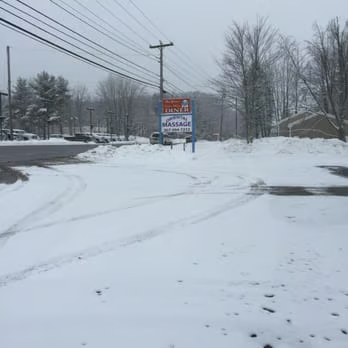
The View From the Street
Have you noticed an influx of non-descript massage parlors quietly popping up in suburban strip malls, former bank buildings, and quiet downtown corridors across Maine? If you have, you’re not alone.
From Portland and Bath to Lewiston, Rockland, and Bangor, these storefronts share a strikingly consistent blueprint: frosted or blacked-out windows, heavy security cameras trained on the front door, late-night hours, and a steady stream of lone male visitors slipping in and out.
On the surface, they register as basic wellness spas. On online escort message boards and review directories like Skip The Games or RubMaps, however, the reality of the business model is discussed in plain text. Standard bodywork rates of $60 an hour serve as a mere cover charge; the real revenue is generated through secondary, illicit menu items negotiated behind closed doors; ranging from quick tips for explicit services to full-scale commercial sex.
To the casual observer, it looks like localized, small-scale vice. But behind the neon “OPEN” signs sits a highly organized, multi-million-dollar national supply chain that uses rural and semi-urban New England towns as high-profit, low-risk operational hubs.
The Transnational Pipeline & Corporate Shells
These locations do not operate in a vacuum, nor are they independent local businesses. Federal human trafficking task forces and regional law enforcement affidavits reveal that the vast majority of these illicit massage businesses (IMBs) are tied to organized networks operating out of regional transportation hubs like Flushing, Queens, and Manhattan’s Chinatown.
The operational model relies on three core mechanisms:
1. Debt Bondage & Rotating Staff: Female operators, frequently Chinese or East Asian nationals, are brought into the country under false promises of legitimate hospitality or spa work, often incurring tens of thousands of dollars in smuggling debt. To keep local law enforcement from establishing rapport or tracking
individuals, managers routinely rotate staff between different storefronts across state lines every few weeks.
2. Corporate LLC Shells & Invisible Owners: Business registrations filed with the Maine Secretary of State frequently list straw owners, fake addresses, or commercial registered agent services. This creates a firewall that protects the true network operators from civil or criminal liability when a specific shop gets raided or shut down.
3. Exploitation of Municipal Gaps: Small Maine municipalities rarely have dedicated vice units or code enforcement officers equipped to audit commercial massage licensing. Network operators deliberately target towns where municipal ordinances are weak, allowing them to open shop quickly and operate for months or years before triggering a multi-agency investigation.
The Paper Trail — From Lewiston to Rockland
While the corporate paper trail hides behind anonymous LLC filings, law enforcement interventions across Maine have ripped the mask off these operations, exposing how they actually run on the ground.
In late 2024, federal and local task forces dismantled networks operating out of Lewiston, Bath, and Rockland. The public court affidavits tell a consistent, grim story:
The Bath & Lewiston Indictment (State v. Qiu): Federal authorities and local police targeted operations managed by out-of-state coordinators like Richard Qiu of Brooklyn, NY. Investigators recovered thousands in bundled cash, surveillance equipment, and physical evidence directly tying the locations to commercial sex trafficking and debt bondage, where vulnerable workers were trapped under the weight of smuggling debts owed to transnational handlers.
The Rockland Park Street Raids: A multi-agency crackdown on a supposed “Asian Massage” storefront on Park Street led to a sweep where numerous individuals were summonsed for soliciting prostitution. Search warrants and subsequent trash pulls revealed handwritten ledgers tracking client appointments, tips, and financial splits in Chinese characters…proving these were centralized, commercial vice operations masquerading as local wellness businesses.
Systemic Blind Spots & Pandemic Relief Exploitation
What makes Maine an attractive sandbox for these networks isn’t just rural anonymity; it is the systemic failure of municipal and federal oversight.
During the height of the COVID-19 pandemic, federal relief programs intended to keep struggling local mom-and-pop businesses afloat were systematically looted by shell companies tied to illicit massage networks. Review of federal databases shows that entities registered to questionable massage storefronts across New England, including locations in Maine, managed to secure thousands of dollars in Paycheck Protection Program (PPP) loans.
When federal relief cash flows directly into opaque corporate structures with no real oversight, and local code enforcement lacks the resources or mandate to audit commercial spa licenses, traffickers find a frictionless environment.
The Bottom Line
Strange Maine will continue tracking these networks, publicizing the corporate entities behind them, and holding municipal officials accountable for looking the other way. A community that ignores the reality of what’s happening behind the frosted glass of its local strip malls becomes a permanent safe haven for exploitation.
We are not out of order. We are the NEW order.


Leave a Reply